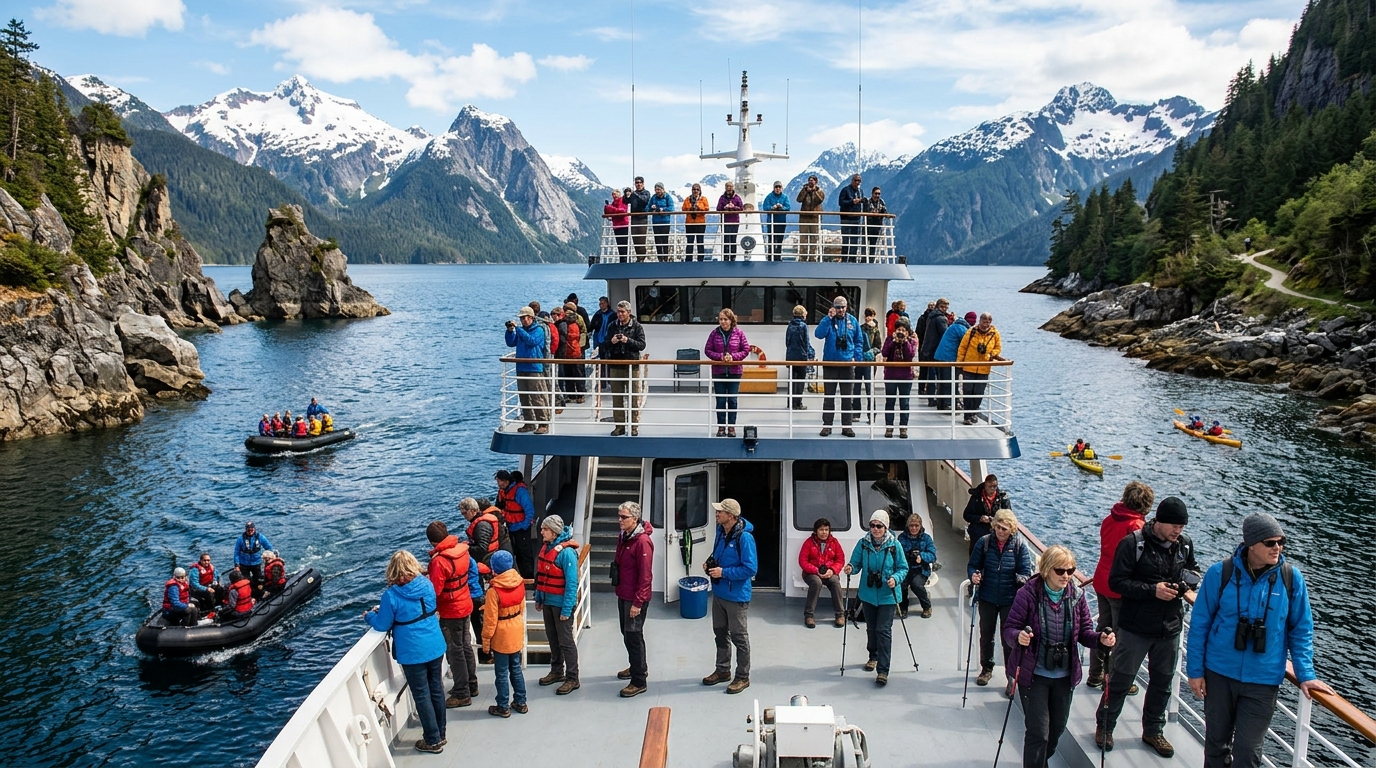
Adventure cruise vacation planning involves choosing the right ship size, destination, and itinerary to match your travel style. Small-ship expedition cruises offer the most immersive experiences, while careful timing, packing, and budgeting decisions can make or break your trip. This guide covers everything you need to plan with confidence.
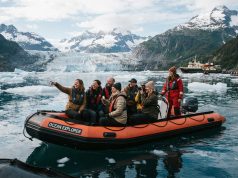
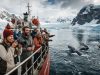
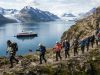
There’s a moment on an expedition cruise when everything clicks. The ship drops anchor in a remote bay, a zodiac boat lowers into the water, and within minutes, you’re standing somewhere most people will never set foot. No resort shuttle. No tour group of 300. Just you, a knowledgeable guide, and a coastline that feels entirely untouched.
That’s the promise of adventure cruising—and it’s a promise the industry is increasingly delivering on. According to the Cruise Lines International Association (CLIA), expedition and adventure cruising is one of the fastest-growing segments in the cruise industry, with passenger numbers climbing steadily year over year. Travelers are no longer satisfied with floating hotels that stop at busy port towns. They want to get into the wild.
But planning one of these trips is a different beast compared to booking a mainstream Caribbean cruise. The destinations are more remote, the logistics more complex, and the decisions more consequential. Get it right, and you’ll have a trip you talk about for decades. Get it wrong, and you’ll spend a week on a ship that doesn’t match your expectations.
This guide walks you through every stage of cruise vacation planning for an adventure-focused trip—from choosing the right style of expedition to what to pack when you’re heading somewhere truly off the grid.
What Makes an Adventure Cruise Different from a Mainstream Cruise?
Adventure cruising is defined by access. Where traditional cruise ships prioritize amenities and entertainment onboard, expedition and adventure cruises prioritize where the ship can actually go—and what you can do when you get there.
These trips typically involve:
- Smaller ships that can navigate shallow waters, narrow channels, and remote anchorages
- Expert-led excursions with naturalists, historians, geologists, and local guides
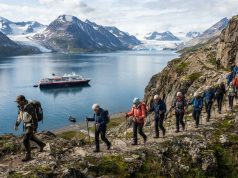
- Active shore experiences including kayaking, hiking, snorkeling, and wildlife tracking
- Fewer passengers, which means more personalized experiences and less environmental impact
The trade-off is that onboard amenities are more modest. You won’t find Broadway-style shows or water parks. What you will find is a community of like-minded travelers, nightly expedition briefings, and a lecture program that actually enhances what you experience on shore.
How to Choose the Right Adventure Cruise for Your Style
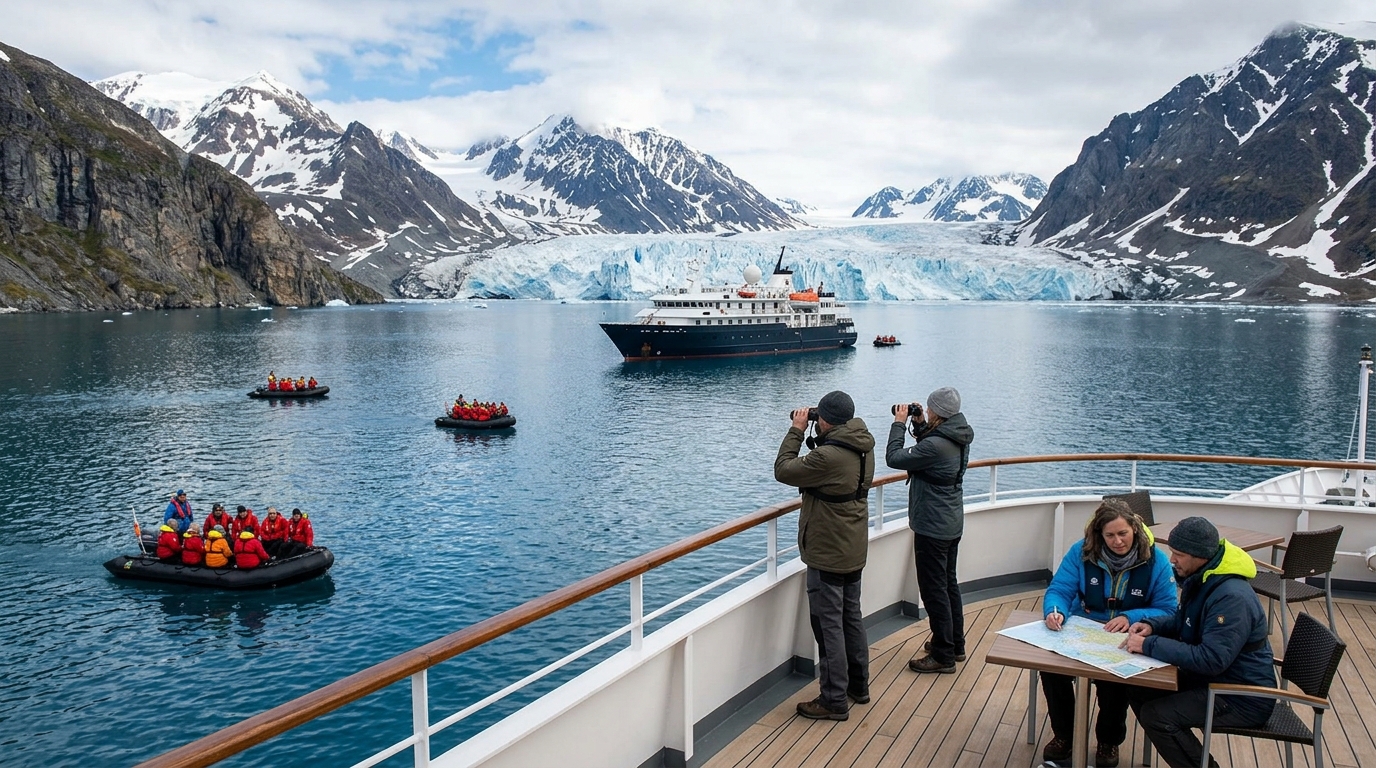
The adventure cruise market has expanded dramatically, which is great news for travelers—but it also means there’s more to compare. Before you commit to a specific itinerary, it helps to identify what kind of traveler you are.
What level of adventure are you comfortable with?
Adventure cruises exist on a spectrum. Some are genuinely rugged—think Antarctic expeditions where passengers are briefed on survival protocols and gear is mandatory. Others are more “soft adventure”—a small-ship voyage through Southeast Asian islands, for instance, where the pace is relaxed and the excursions are optional.
Assess your physical fitness honestly. Many adventure cruise itineraries involve zodiac transfers, uneven terrain, and long walking distances. If you have mobility limitations, look for operators that specifically cater to mixed-ability groups.
Solo traveler, couple, or family?
Small ship adventure cruises tend to attract a wide age range, but the social dynamic is quite different from a large cruise ship. Solo travelers often find the experience more connected and less isolating. Families with children should look for itineraries designed with younger passengers in mind—some operators offer dedicated youth programs on expedition voyages.
What’s your budget?
Adventure cruises are typically more expensive than mainstream cruises on a per-day basis. A week-long Galápagos expedition, for example, can range from $3,000 to $10,000 per person depending on the ship and cabin category. Polar voyages to Antarctica or the Arctic regularly exceed $10,000. That said, many operators include excursions, gear, and expert-led programming in the base price—costs that would add up quickly on a traditional cruise.
The Best Adventure Cruise Destinations in the World
Choosing a destination is the most exciting part of the planning process, and the options are genuinely staggering. Below is a breakdown of the world’s top regions for adventure cruising, along with what makes each one compelling.
|
Destination |
Best For |
Ideal Travel Season |
Key Wildlife |
|---|---|---|---|
|
Antarctica |
Polar expedition, pristine wilderness |
November – March |
Penguins, humpback whales, leopard seals |
|
Galápagos Islands |
Unique wildlife, UNESCO heritage |
Year-round (dry season: June–Dec) |
Giant tortoises, marine iguanas, blue-footed boobies |
|
Norwegian Fjords |
Dramatic scenery, Northern Lights |
May – August (summer); Sept – March (aurora) |
Reindeer, puffins, Arctic foxes |
|
Alaska Inside Passage |
Glaciers, bear watching, whale watching |
May – September |
Brown bears, humpback whales, bald eagles |
|
Patagonia |
Remote wilderness, hiking |
November – March |
Condors, pumas, Magellanic penguins |
|
Cultural immersion, island hopping |
November – April |
Orangutans, exotic marine life, rare birds |
|
|
Amazon River |
Rainforest exploration, river cruising |
June – October (low water season) |
Pink river dolphins, caimans, macaws |
Each of these regions rewards a specific kind of traveler. Antarctica is for those who want to stand at the edge of the world. The Galápagos suits wildlife enthusiasts who want up-close encounters with species found nowhere else. Alaska appeals to travelers drawn to dramatic landscapes and active wildlife viewing.
When selecting adventure cruise destinations, timing matters as much as geography. Most remote destinations have a defined season window, outside of which conditions are either dangerous or simply not spectacular. Research your destination’s weather patterns, peak wildlife activity periods, and permit restrictions before you book.
Understanding Small Ship Adventure Cruises
The vessel you travel on shapes every part of your experience. Small ship adventure cruises—typically carrying fewer than 200 passengers, and often fewer than 100—are designed specifically for expedition-style travel.
Why ship size matters for adventure cruising
Large cruise ships simply cannot access the anchorages that make adventure cruising worthwhile. A ship carrying 5,000 passengers cannot navigate the narrow channels of Patagonia or land at a remote Antarctic cove. Small ships can.
Beyond access, smaller passenger counts create a fundamentally different atmosphere. You get to know your fellow travelers. The expedition team knows your name. Mealtimes become genuine conversations rather than cafeteria logistics.
Key operators to know
Several operators have built strong reputations in the small-ship expedition space:
- Lindblad Expeditions — Known for its partnership with National Geographic and a strong focus on science and conservation
- Hurtigruten Expeditions — Norwegian heritage, strong polar expertise, and a commitment to sustainability
- Ponant — French operator offering a more refined onboard experience combined with genuine expedition capability
- Quark Expeditions — Polar specialist with a reputation for ultra-remote itineraries
- Silversea Expeditions — Luxury end of the spectrum, combining expedition access with high-end service
Each operator has a distinct character. Some prioritize learning and science. Others lean toward comfort. Research the onboard experience as carefully as you research the destination.
Building Your Adventure Cruise Itinerary
A well-planned adventure cruise itinerary balances time at sea, time ashore, and time for rest. Many first-time expedition cruisers underestimate how physically and mentally engaging these trips are. A full day of zodiac landings, hiking, and wildlife briefings is genuinely tiring—in the best possible way.
How to read an adventure cruise itinerary
Expedition itineraries are typically listed as “subject to conditions.” Unlike mainstream cruises with fixed port days, adventure cruise schedules are built around opportunity. If the sea state prevents a landing, the expedition leader will pivot to an alternative. If a wildlife encounter extends beyond schedule, the itinerary flexes to accommodate it.
This flexibility is a feature, not a bug. It’s what allows expedition teams to deliver genuinely extraordinary moments. But it does mean you shouldn’t book a flight home the morning after disembarkation—build in at least one buffer day.
Sample 10-day Galápagos adventure cruise itinerary
Day 1–2: Arrive in Quito, Ecuador. Transfer to Galápagos. Board ship in Baltra. First evening briefing with naturalist team.
Day 3: Isabela Island — snorkeling with sea lions, walk through volcanic landscape.
Day 4: Fernandina Island — largest and most pristine island in the archipelago. Marine iguana colonies.
Day 5: Urbina Bay — giant tortoise habitat. Optional kayaking.
Day 6: Santiago Island — Sullivan Bay lava fields. Blue-footed booby colony.
Day 7: Bartolomé Island — iconic volcanic pinnacle. Swimming with Galápagos penguins.
Day 8: Santa Cruz Island — Giant Tortoise Research Station. Charles Darwin Foundation.
Day 9: Española Island — Nazca boobies, waved albatross (seasonal), sea lion rookery.
Day 10: Return to Baltra. Fly back to mainland.
Adventure Cruise Tips for First-Time Expedition Travelers
Planning an expedition cruise for the first time comes with a learning curve. These practical adventure cruise tips will help you prepare properly.
Book early—and understand cancellation policies
The most popular expedition voyages fill up 12–18 months in advance. This is especially true for Antarctica departures and Galápagos itineraries, which operate under strict passenger caps. If you have a specific window in mind, start the booking process well ahead of time.
Cancellation policies on expedition cruises tend to be stricter than mainstream cruises. Deposits are often non-refundable, and final payment deadlines can be early. Travel insurance is not optional on these trips—it’s essential.
Invest in the right gear
Packing for an adventure cruise is different from packing for a resort vacation. The essentials vary by destination, but most expedition voyages require:
- Waterproof outer layer — A proper dry-top or waterproof jacket, not a water-resistant one
- Layering base — Thermal underlayers for cold-climate destinations
- Rubber boots — Many operators provide these for zodiac landings, but confirm in advance
- Binoculars — Non-negotiable for wildlife viewing
- Dry bag — For protecting electronics during zodiac transfers
- Seasickness medication — Drake Passage and open ocean crossings can be rough
Many operators provide a full gear list before departure. Read it carefully and follow it. Under-packing for a polar expedition is a miserable experience.
Arrive early at your embarkation port
Remote embarkation ports like Ushuaia (Antarctica), Baltra (Galápagos), and Longyearbyen (Svalbard) are themselves fascinating destinations. More importantly, flights to these locations can be disrupted, and missing embarkation means missing the entire voyage. Arrive at least one day early.
Engage with the expedition team
The naturalists, historians, and scientists aboard expedition ships are often world-class experts in their fields. The evening lectures, Q&A sessions, and informal conversations at dinner are part of what makes small ship adventure cruises genuinely educational. Bring your curiosity. Ask questions.
How to Budget for an Adventure Cruise Vacation
Adventure cruise vacation planning requires a different budgeting approach than mainstream travel. Here’s a realistic breakdown of what to expect.
|
Cost Category |
Typical Range |
Notes |
|---|---|---|
|
Cruise fare |
$3,000 – $15,000+ per person |
Varies hugely by destination, operator, and cabin type |
|
Flights |
$500 – $3,000 per person |
Remote destinations may require multiple connections |
|
Pre/post accommodation |
$150 – $500 per night |
Budget for at least 2–3 nights |
|
Travel insurance |
$200 – $800 per person |
Essential—don’t skip this |
|
Gear and equipment |
$200 – $1,500 |
One-time investment that pays off across multiple trips |
|
Gratuities |
$150 – $300 per person |
Many operators have a recommended tipping structure |
|
Incidentals |
$200 – $500 |
Souvenirs, meals ashore, beverages onboard |
Many all-inclusive expedition fares cover meals, excursions, and expert programming. Always clarify what’s included before comparing prices across operators.
What to Expect Onboard a Small Expedition Ship
The onboard experience on an adventure cruise is intentionally straightforward. Cabins are functional rather than lavish (though luxury operators like Silversea and Ponant offer genuinely impressive accommodations). Common spaces—lounges, mud rooms for gear, lecture theaters—are designed around the expedition mission.
Meals are typically shared-seating and communal, which is part of the social appeal. You’ll find yourself debriefing the day’s sightings over dinner with strangers who quickly become travel companions.
Connectivity is limited or expensive on most expedition vessels. This is worth embracing rather than fighting. Some of the most rewarding aspect of adventure cruising is the enforced disconnection from daily life.
Sustainability and Responsible Adventure Cruising
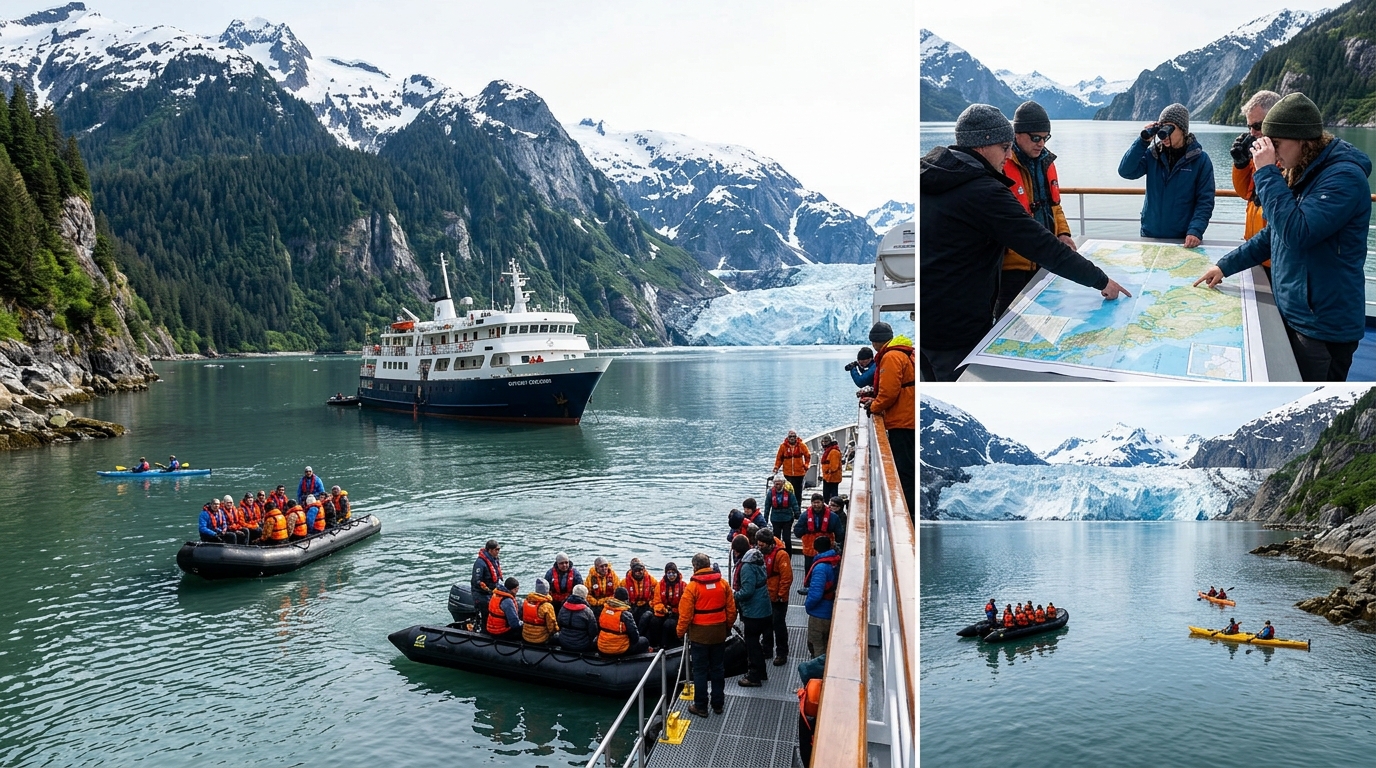
As adventure cruise destinations grow in popularity, the industry’s environmental footprint deserves serious attention. Responsible cruise vacation planning now means considering the sustainability credentials of your chosen operator.
Key questions to ask:
- Is the operator a member of IAATO (International Association of Antarctica Tour Operators) or a recognized body with environmental standards?
- What are the ship’s emissions standards? Many newer expedition vessels use hybrid or LNG propulsion systems.
- Does the operator contribute to conservation projects in the destinations it visits?
- What are the passenger-to-guide ratios on shore excursions?
Operators like Hurtigruten and Lindblad have made public commitments to reducing their environmental impact. Choosing operators with genuine accountability is part of traveling responsibly.
Final Thoughts: Making Your Adventure Cruise Unforgettable
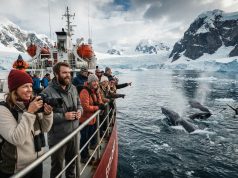
The best adventure cruises share a common quality: they change how you see the world. Standing on Antarctic ice, watching a humpback whale breach fifty meters from your zodiac, or hiking through a Galápagos landscape that Darwin himself explored—these aren’t experiences you forget.
But those moments don’t happen by accident. They’re the result of thoughtful cruise vacation planning, careful operator selection, and the willingness to show up prepared. Do the research. Book early. Pack properly. And when you’re standing somewhere remarkable, put the camera down for a moment and just be there.
The world’s most extraordinary places are still accessible—for now. The travelers who make the effort to reach them come back fundamentally changed.
Frequently Asked Questions About Adventure Cruise Vacation Planning
What is the best time of year for adventure cruise vacation planning?
The ideal time depends entirely on your destination. Antarctica is only accessible from November to March. Alaska’s Inside Passage peaks between May and September. The Galápagos operates year-round, though the dry season (June–December) brings calmer seas. Always research your specific destination’s seasonal windows before booking.
How far in advance should I book an adventure cruise?
Most expedition operators recommend booking 12–18 months in advance for popular itineraries, particularly Antarctica and Galápagos voyages. Some departures sell out even earlier. If you have a specific date or ship in mind, start the process as soon as possible.
Are adventure cruises suitable for first-time cruisers?
Yes. Many first-time cruisers actually prefer expedition cruises because the smaller ship size and immersive programming feel less overwhelming than a large mainstream vessel. That said, be honest about your comfort with open-ocean sailing and physical activity levels before booking.
What is the difference between an expedition cruise and an adventure cruise?
The terms are often used interchangeably. “Expedition cruise” typically implies a more scientific or conservation-focused mission, often in remote polar or wilderness regions. “Adventure cruise” is a broader term covering active, experience-driven voyages that may include cultural immersion and soft adventure activities. Both involve small ships and expert-led programming.
Do I need travel insurance for an adventure cruise?
Absolutely. Travel insurance for adventure cruising should include medical evacuation coverage, trip cancellation protection, and ideally a policy that covers adventure activities. Medical evacuation from a remote location—like the Southern Ocean—can cost hundreds of thousands of dollars without coverage.
What is the smallest ship used for adventure cruises?
Some expedition operators use vessels carrying as few as 12 passengers for ultra-remote itineraries. More commonly, small ship adventure cruises carry between 50 and 200 passengers. The smaller the ship, the more remote the access—but also the fewer the onboard amenities.
How do I choose between different adventure cruise operators?
Compare operators on four dimensions: destination expertise, expedition team quality, ship specifications (age, stability, cabin size), and included value (what’s covered in the base fare). Read reviews from previous passengers on platforms like Cruise Critic and TripAdvisor, and don’t hesitate to call the operator directly with specific questions.