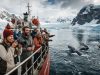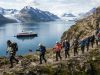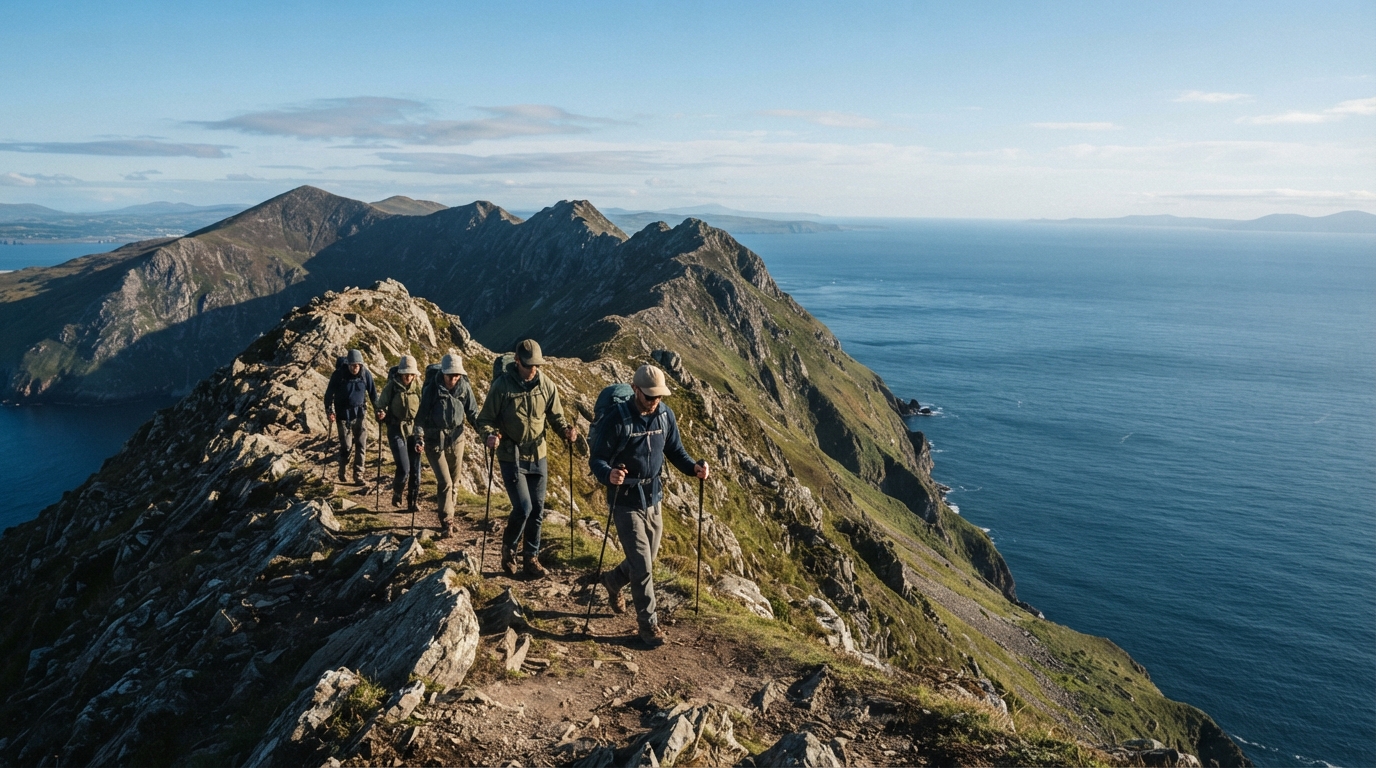
Adventure cruises combine kayaking and hiking tours with the comfort of a cruise ship, offering active travelers access to remote wilderness, guided outdoor excursions, and expert-led exploration — all from a single itinerary. They suit solo travelers, couples, and small groups seeking meaningful, movement-based travel.
Few travel experiences match the feeling of paddling through a glacier-fed fjord at dawn, then lacing up your boots for a ridge-top hike by afternoon — all without unpacking twice. That’s the promise of adventure cruising with kayaking and hiking tours, and for active travelers, it’s quickly becoming the gold standard of expedition travel.
Traditional cruises have long been associated with poolside lounging and buffet lines. Adventure cruises are built around a completely different philosophy. The ship is your base camp. The coastline, the mountain trails, and the open water are your playground. Every port of call is chosen not for its duty-free shops, but for its hiking trails, sea caves, wildlife encounters, and paddling opportunities.
This guide covers everything you need to know about planning, booking, and experiencing an adventure cruise with kayaking and hiking tours — from the world’s top destinations to what to pack, how much to budget, and how to choose the right operator for your fitness level and travel style.
Whether you’re a seasoned outdoor adventurer or someone ready to push beyond the comfort zone for the first time, adventure cruising offers a structured, supported, and genuinely thrilling way to explore the planet’s wildest corners.
What Are Adventure Cruises with Kayaking and Hiking Tours?
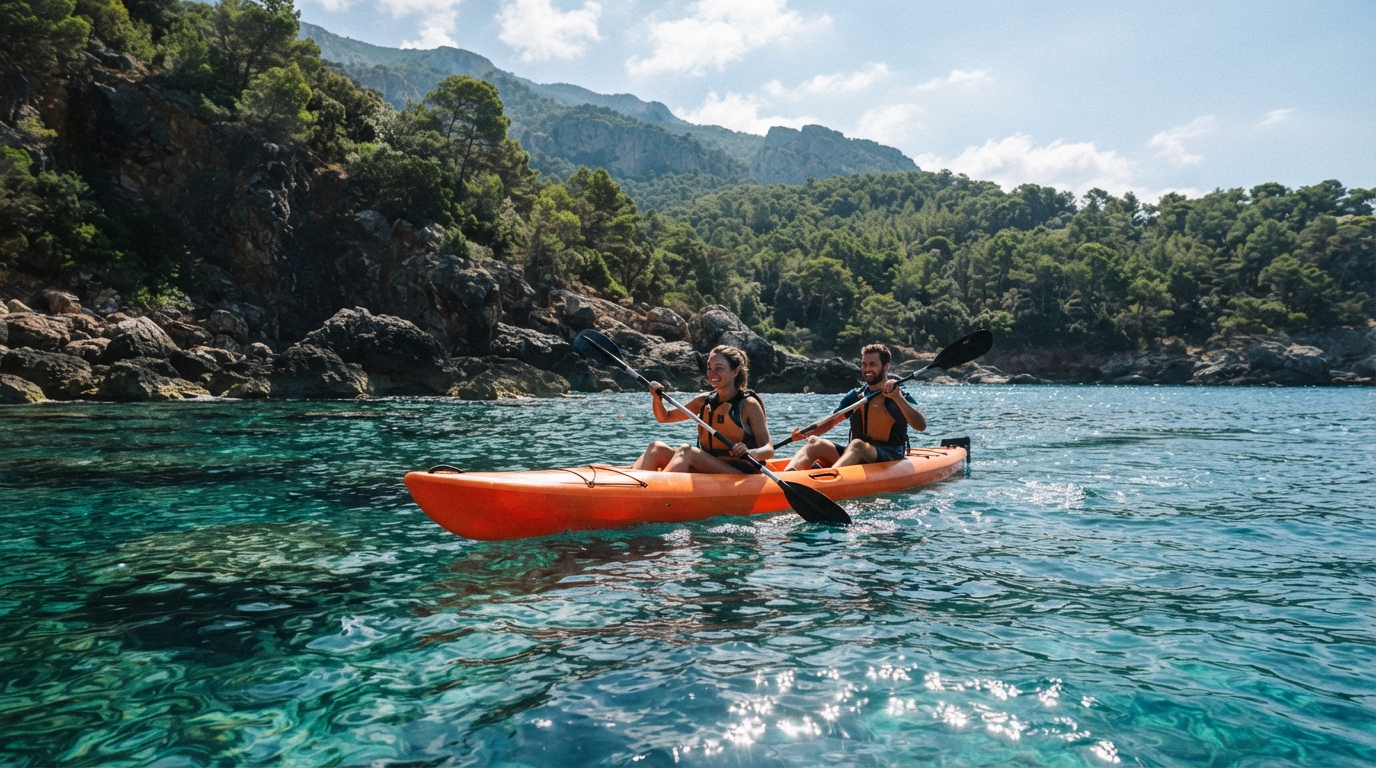
Adventure cruises are small-ship or expedition-style voyages designed specifically for active travelers who want to engage physically with the destinations they visit. Unlike mainstream cruises that carry thousands of passengers, most adventure cruise vessels accommodate between 12 and 200 guests — keeping group sizes manageable and enabling access to remote locations that larger ships simply cannot reach.
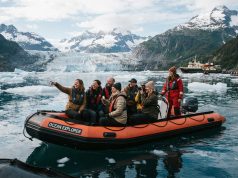
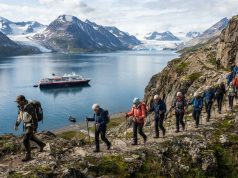
Kayaking and hiking tours are among the most popular activities offered on these voyages. Sea kayaking allows passengers to navigate coastlines, mangrove channels, and glacial bays at water level — an entirely different perspective than viewing the same scenery from a ship’s deck. Hiking excursions range from leisurely beach walks to demanding ascents through alpine terrain, depending on the destination and the operator’s activity programming.
Most adventure cruise operators structure their days around zodiac landings, guided shore excursions, and optional water-based activities. Naturalists, geologists, marine biologists, and local guides frequently accompany groups on kayaking and hiking tours, enriching each experience with expert commentary and ecological insight.
What Activities Are Included in Adventure Cruises?
The specific activities vary by operator and destination, but most adventure cruises with outdoor activity programming include some combination of the following:
|
Activity |
Description |
|---|---|
|
Sea kayaking |
Guided paddling excursions along coastlines, fjords, and bays |
|
Hiking and trekking |
Guided trails ranging from easy walks to strenuous day hikes |
|
Zodiac cruising |
Small inflatable boat rides for wildlife viewing and glacier approaches |
|
Snorkeling |
Underwater exploration in tropical and subtropical destinations |
|
Wildlife watching |
Guided observation of marine life, birds, and terrestrial animals |
|
Photography workshops |
Expert-led sessions in landscape and wildlife photography |
|
Cultural immersions |
Visits to remote communities and indigenous heritage sites |
Kayaking and hiking tours are typically the backbone of any adventure cruise itinerary, offered daily or near-daily depending on weather conditions and port schedules.
Why Active Travelers Are Choosing Adventure Cruises
The growth of the adventure travel market tells a clear story. According to the Adventure Travel Trade Association (ATTA), the global adventure tourism industry was valued at over $288 billion in recent years, with active water and land-based experiences consistently ranked among the top traveler preferences. Adventure cruises sit at the intersection of multiple high-demand categories: expedition travel, eco-tourism, wellness travel, and small-group experiences.
For active travelers specifically, adventure cruises solve a problem that standard travel planning cannot easily address. Reaching a remote fjord in Chilean Patagonia, for instance, might require multiple flights, ground transportation, and independent gear logistics. An adventure cruise eliminates that friction — the ship delivers you directly to the paddling location, the kayaks are onboard, the guide is ready, and the route has been scouted in advance.
There’s also the matter of safety and support. Solo travelers, in particular, benefit enormously from the built-in community and professional guiding infrastructure that adventure cruises provide. You’re never paddling alone in unfamiliar waters or hiking unmarked trails without an experienced leader.
Are Adventure Cruises Worth It for Active Travelers?
The short answer is yes — with conditions. Adventure cruises are worth the investment for travelers who prioritize experience density over cost efficiency. Per day, they typically cost more than independent travel arrangements. But per meaningful experience, they often deliver more: expert guides, equipment included, meals provided, and zero logistical overhead.
They are particularly well-suited for:
- Travelers visiting remote destinations where independent kayaking and hiking access is logistically complex
- Those who prefer structured group experiences with professional safety oversight
- First-time expedition travelers who want guidance without sacrificing adventure
- Travelers with limited time who want to maximize the quality of each day
They are less ideal for highly experienced, self-sufficient adventurers who prefer to set their own pace and design custom routes independently.
Top Destinations for Adventure Cruises with Outdoor Activities
Destination selection is one of the most important decisions in planning an adventure cruise. The best adventure cruises for kayaking and hiking experiences are found in regions where dramatic landscapes meet accessible coastlines and well-established hiking terrain.
Patagonia and the Chilean Fjords
Few regions on earth rival Patagonia for sheer visual impact. The Chilean fjord network stretches over 1,000 kilometers of glacially carved waterways, punctuated by hanging ice fields, dense temperate rainforest, and virtually uninhabited coastline. Sea kayaking through the Beagle Channel or around the Torres del Paine coastal edges places paddlers within arm’s reach of calving glaciers and Andean condors.
Hiking in Chilean Patagonia varies from short coastal walks to multi-day trekking in Torres del Paine National Park, one of South America’s most celebrated UNESCO Biosphere Reserves. Adventure cruise itineraries in this region typically run between 8 and 21 days, departing from Ushuaia, Puerto Natales, or Punta Arenas.
Alaska and the Inside Passage
Alaska’s Inside Passage is one of the world’s premier destinations for combining sea kayaking and coastal hiking. The protected waterway runs from Washington State north through British Columbia and into Southeast Alaska, threading between islands, fjords, and temperate rainforest shorelines dense with wildlife.
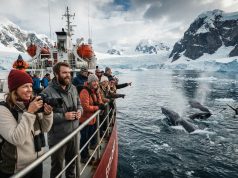
Glaciers, including those in Glacier Bay National Park and Kenai Fjords National Park, are accessible by kayak — an experience few other travel formats can replicate. Hiking options range from beach-level trails through Sitka spruce and hemlock forest to elevated ridgelines with panoramic views of the Pacific. Brown bears, humpback whales, orcas, and bald eagles are common sightings throughout the region.
The Galápagos Islands, Ecuador
The Galápagos archipelago offers a completely different adventure cruise experience — one defined more by wildlife encounter density than dramatic landscape. Sea kayaking around the volcanic island shorelines places travelers in direct proximity to marine iguanas, sea lions, blue-footed boobies, and Galápagos penguins. Hiking on islands like Isabela, Fernandina, and Santa Cruz takes visitors through otherworldly lava fields, crater lakes, and highland tortoise reserves.
Because the Galápagos is a strictly controlled national park, all visitors must travel with licensed operators and certified naturalist guides — making adventure cruises the most practical and often only viable way to experience the islands’ full range of hiking and kayaking opportunities.
Norway and the Arctic Fjords
Norway’s fjord network is among the most dramatic in the Northern Hemisphere. Kayaking the Nærøyfjord — a UNESCO World Heritage Site — or navigating the mirror-flat waters of Geirangerfjord under towering waterfalls ranks among Europe’s great paddling experiences. Hiking options abound across the fjord region, from the famous Trolltunga and Preikestolen trails to lesser-known ridgelines accessible only by sea.
For those drawn further north, Svalbard (Spitsbergen) offers Arctic adventure cruising at its most raw: polar bear sightings, walrus colonies, and kayaking through pack ice channels under the midnight sun.
New Zealand’s Fiordland
Fiordland National Park in New Zealand’s South Island contains some of the most spectacular fjord scenery on the planet. Milford Sound and Doubtful Sound are the two most frequently visited, though the broader fiord network remains largely wilderness. Kayaking the glassy waters beneath 1,200-meter cliff faces and waterfalls that drop directly into the sea is an experience of genuine awe. Hiking options include sections of the Milford Track — frequently cited as one of the world’s great walks — and numerous shorter trails through ancient podocarp forest.
How to Plan an Adventure Cruise with Kayaking and Hiking
Planning an adventure cruise requires more preparation than booking a conventional cruise. The activities are more physically demanding, the conditions more variable, and the destinations often more remote. Here’s a structured approach to getting it right.
Step 1: Assess Your Fitness and Experience Level
Adventure cruise operators typically categorize their itineraries by activity level — ranging from easy (light hiking, beginner kayaking) to challenging (multi-hour paddles, strenuous ascents). Honest self-assessment matters here. Overestimating fitness capacity leads to a frustrating experience; underestimating it leads to boredom.
Most operators offer activity level descriptors like the following:
|
Level |
Typical Hiking |
Typical Kayaking |
|---|---|---|
|
Easy |
1–3 hours, flat terrain |
1–2 hours, calm water |
|
Moderate |
3–5 hours, some elevation |
2–4 hours, mild conditions |
|
Challenging |
5–8+ hours, significant ascent |
4–6+ hours, variable conditions |
|
Expedition |
Multi-day trekking |
Extended open-water crossings |
Step 2: Choose the Right Operator
Not all adventure cruise operators are equal in terms of guide quality, equipment standards, environmental practices, or itinerary depth. When evaluating operators for a kayaking and hiking focused voyage, look for:
- ATTA membership or certification: The Adventure Travel Trade Association sets industry-recognized standards for active travel operators.
- Small group sizes: Fewer passengers per guide means better instruction, safer conditions, and more personalized experiences.
- Inclusive kayaking: Some operators charge extra for kayaking as an add-on. The best adventure cruises for kayaking and hiking experiences include paddling as a standard daily activity.
- Sustainability credentials: Look for operators with low-impact landing practices, responsible wildlife viewing policies, and carbon offset programs.
Established operators in the adventure cruise sector include Lindblad Expeditions, Hurtigruten Expeditions, G Adventures (Ocean), Quark Expeditions, and Poseidon Expeditions, among others. Each specializes in different geographic regions and activity profiles.
Step 3: Select Your Destination and Season
Timing matters enormously in adventure cruising. Patagonia’s best kayaking and hiking conditions align with the Southern Hemisphere summer (November to March). Alaska’s Inside Passage season runs from May through September. The Galápagos is accessible year-round but wildlife encounters vary by month. Norway’s fjords are best in summer for long daylight hours and stable paddling conditions.
Researching seasonal weather, wildlife cycles, and crowd levels for your target destination will significantly improve your overall experience.
Step 4: Understand What’s Included
Adventure cruise pricing can appear high on the surface, but the all-inclusive nature of most itineraries changes the cost calculation substantially. Typically included in the per-person price:
- All meals and non-alcoholic beverages onboard
- Kayak equipment (paddle, wetsuit or drysuit, PFD, spray skirt)
- Hiking equipment recommendations and safety briefings
- Guided shore excursions and zodiac transfers
- Naturalist and specialist guide fees
- Port taxes and landing fees
Excluded items typically include international flights, travel insurance, gratuities, alcoholic beverages, and personal gear purchases. Always request a detailed inclusions list before booking.
Step 5: Prepare Physically and Logistically
Physical preparation for an adventure cruise should begin at least 8–12 weeks before departure. Targeted training for kayaking and hiking includes:
- Cardiovascular conditioning: Running, cycling, or swimming three to four times weekly
- Upper body strength: Paddle-specific exercises including seated rows, shoulder presses, and core stabilization
- Lower body strength and endurance: Hill walking with a loaded daypack to simulate hiking conditions
- Flexibility: Regular stretching or yoga to reduce injury risk during variable terrain hiking
Gear preparation is equally important. Most operators provide a detailed packing list specific to the destination and season. Key personal items typically include moisture-wicking base layers, waterproof outer layers, sturdy waterproof hiking boots, trekking poles, and sun protection.
What to Expect Onboard an Adventure Cruise Ship
The onboard experience of an adventure cruise is deliberately different from a standard cruise ship. Vessels are smaller, amenities are functional rather than luxurious (though some premium operators offer high-end cabins), and the social atmosphere centers on shared outdoor experience rather than entertainment programming.
Daily Rhythm on an Adventure Cruise
A typical day on an adventure cruise with kayaking and hiking tours follows a general structure:
6:00–7:00 AM — Wake-up and early wildlife sighting opportunities from the ship’s deck
7:00–8:00 AM — Breakfast; daily briefing from naturalist guides outlining the day’s activities and weather conditions
8:30–12:30 PM — Morning shore excursion (kayaking, zodiac cruise, or guided hike)
12:30–2:00 PM — Return to ship; lunch served; rest or informal lectures
2:00–5:30 PM — Afternoon excursion or second kayaking and hiking session
5:30–7:00 PM — Return to ship; recap session; personal time
7:00 PM onward — Dinner; evening presentation by onboard specialists; social time
The pace is full but not frenetic. Days are structured around weather windows and wildlife opportunities, meaning itineraries remain flexible — a characteristic that defines the best adventure cruises for kayaking and hiking experiences.
Packing List for an Adventure Cruise with Kayaking and Hiking
Efficient packing is essential, particularly because cabin storage on small expedition ships is limited. The following list covers the core personal gear needs for a kayaking and hiking adventure cruise in a temperate or sub-polar destination:
Layering System:
- Moisture-wicking thermal base layers (top and bottom, 2 sets minimum)
- Mid-layer fleece or insulated jacket
- Waterproof and windproof hardshell jacket and trousers
- Lightweight down jacket for cold evenings
Footwear:
- Waterproof hiking boots (broken in before departure)
- Rubber-soled boat shoes or non-slip deck boots
- Comfortable camp sandals or shoes for onboard use
Kayaking Gear (typically provided by operator):
- Wetsuit or drysuit
- Personal flotation device (PFD)
- Paddle and spray skirt
Personal Accessories:
- Trekking poles (collapsible recommended)
- Sun protection: SPF 50+ sunscreen, UV-protection sunglasses, wide-brim hat
- Dry bags (for camera equipment and personal items during kayaking)
- Headlamp with spare batteries
- Reusable water bottle (1.5L minimum)
- Personal first aid kit and any prescription medications
Environmental Responsibility in Adventure Cruising
The regions best suited to adventure cruising — polar environments, protected marine parks, and remote wilderness coastlines — are also the most ecologically sensitive. Responsible adventure travel operators adhere to a set of principles designed to minimize the environmental footprint of kayaking and hiking tours and onshore landings.
Key environmental practices to look for when choosing an operator include:
- IAATO membership for Antarctic and Arctic operators (International Association of Antarctica Tour Operators)
- Maximum group size per landing site: Most responsible operators limit shore parties to 100 passengers at any one time in sensitive areas
- No-take, leave-no-trace hiking policies: Guides enforce strict rules about collecting natural materials, disturbing wildlife, or leaving waste on shore
- Low-emission vessel technology: An increasing number of expedition ships are incorporating hybrid propulsion systems, LNG fuel, or shore power connectivity to reduce emissions
Travelers themselves play an active role in minimizing impact. Following guide instructions, staying on marked trails during hiking excursions, maintaining respectful distances from wildlife, and avoiding single-use plastics onboard are foundational practices for responsible adventure cruising.
Cost Breakdown: How Much Do Adventure Cruises with Kayaking and Hiking Cost?
Adventure cruise pricing varies widely depending on destination, vessel quality, duration, and operator. The following table provides a general pricing framework based on publicly available market data:
|
Destination |
Duration |
Approximate Per-Person Cost (USD) |
|---|---|---|
|
Alaska Inside Passage |
7–10 days |
$3,500 – $8,000 |
|
Patagonia / Chilean Fjords |
8–14 days |
$5,000 – $12,000 |
|
Galápagos Islands |
8–14 days |
$4,500 – $10,000 |
|
Norway Fjords |
7–10 days |
$3,000 – $7,500 |
|
Antarctica |
10–21 days |
$8,000 – $25,000+ |
These figures typically exclude international airfare, travel insurance, and gratuities. Travel insurance is strongly recommended for all adventure cruise bookings, given the remote nature of many destinations and the non-refundable cost structure of most itineraries.
The Lasting Value of Adventure Cruising
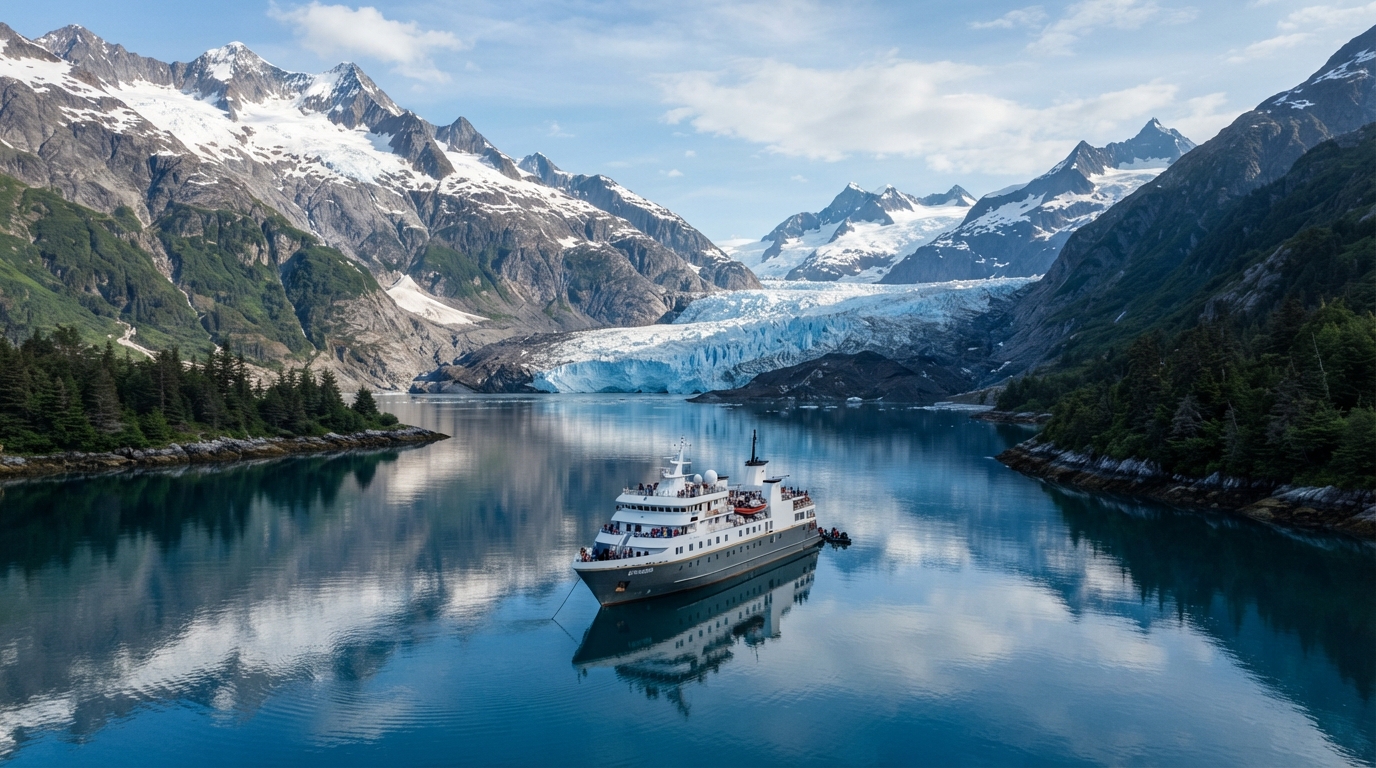
The question of whether adventure cruises are worth it ultimately comes down to what kind of traveler you are and what you want from an experience. If the goal is passive relaxation, a standard resort or cruise will serve you better. But if the goal is to emerge from a trip physically tested, mentally expanded, and genuinely changed by what you’ve seen and done — adventure cruising with kayaking and hiking tours delivers at a level that very few travel formats can match.
Paddling through a fjord you’ve seen only in photographs. Reaching a summit after a full morning’s climb and looking out over an unbroken wilderness horizon. These experiences don’t fade the way resort memories do. They compound.
The top destinations for adventure cruises with outdoor activities — Patagonia, Alaska, the Galápagos, Norway, and Fiordland — are not easily accessible through conventional travel. Adventure cruising brings them within reach, wraps them in professional support and safety infrastructure, and hands you the paddles.
Conclusion
Adventure cruises with kayaking and hiking tours represent one of the most complete and immersive forms of active travel available. They combine the logistical efficiency of guided expedition travel with the freedom of genuine outdoor exploration, placing you in wild, beautiful, and often irreplaceable environments that reward physical effort with extraordinary experience. The planning process requires careful thought around fitness level, destination timing, operator selection, and budget — but the return on that investment is consistently high for travelers who approach it with the right expectations and preparation.
Frequently Asked Questions
1. What are the best adventure cruises for kayaking and hiking experiences?
The best adventure cruises for kayaking and hiking combine daily paddling and guided shore hikes with expert naturalist leadership. Top-rated operators include Lindblad Expeditions, Hurtigruten Expeditions, and G Adventures Ocean, particularly for Patagonia, Alaska, and Norway itineraries.
2. Do I need prior kayaking experience to join an adventure cruise?
Most adventure cruise operators welcome beginners in sea kayaking. Safety briefings, equipment fitting, and guided instruction are typically included before first paddles. Destinations with calm, protected water are particularly suitable for first-time kayakers.
3. How physically fit do I need to be for adventure cruises with hiking?
Fitness requirements vary by itinerary level. Moderate-level cruises typically involve 3–5 hours of hiking on uneven terrain. A regular walking or hiking routine maintained in the 8–12 weeks before departure is generally sufficient preparation for most standard adventure cruise itineraries.
4. What is the best time of year to book a kayaking and hiking adventure cruise?
Season depends on destination. Alaska and Norway are best from May to September. Patagonia and Antarctica run from November to March. The Galápagos offers year-round kayaking and hiking, though specific wildlife encounters vary seasonally.
5. Are adventure cruises suitable for solo travelers?
Yes. Most adventure cruise operators cater well to solo travelers and offer cabin-share arrangements to reduce single-supplement costs. The small-group nature of expedition cruises makes it easy to build connections with fellow passengers who share similar outdoor interests.
6. How far in advance should I book an adventure cruise?
Popular itineraries — especially Galápagos, Antarctica, and Patagonia — frequently sell out 12 to 18 months in advance. Booking early not only secures your preferred departure date but often comes with early-booking discounts from major operators.
7. Is travel insurance required for adventure cruises?
While not always legally mandated, travel insurance that includes emergency medical evacuation coverage is strongly recommended. Many adventure cruise destinations are extremely remote, where medical evacuation costs without insurance can reach tens of thousands of dollars.
8. What kayaking equipment is typically provided on adventure cruises?
Most adventure cruise operators provide sea kayaks, paddles, personal flotation devices (PFDs), spray skirts, and either wetsuits or drysuits suited to the destination’s water temperature. Personal items like gloves, neoprene socks, and paddling gloves are typically the traveler’s responsibility.
9. Can children participate in adventure cruise kayaking and hiking tours?
Many operators offer family-friendly adventure cruises with age-appropriate kayaking and hiking activities. Minimum age requirements vary by operator and destination — some Antarctic and sub-polar voyages set a minimum age of 8 to 12 years. Always check the operator’s family policy before booking.
10. How do adventure cruise operators minimize environmental impact during kayaking and hiking tours?
Responsible operators follow strict no-trace landing protocols, limit group sizes at sensitive shore sites, use low-emission or hybrid propulsion vessels, and comply with regional conservation frameworks such as IAATO guidelines for polar travel. Travelers should verify an operator’s environmental credentials before booking.