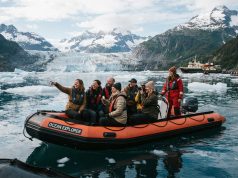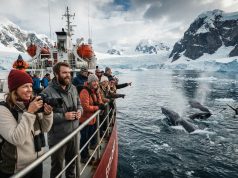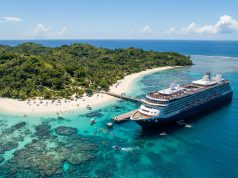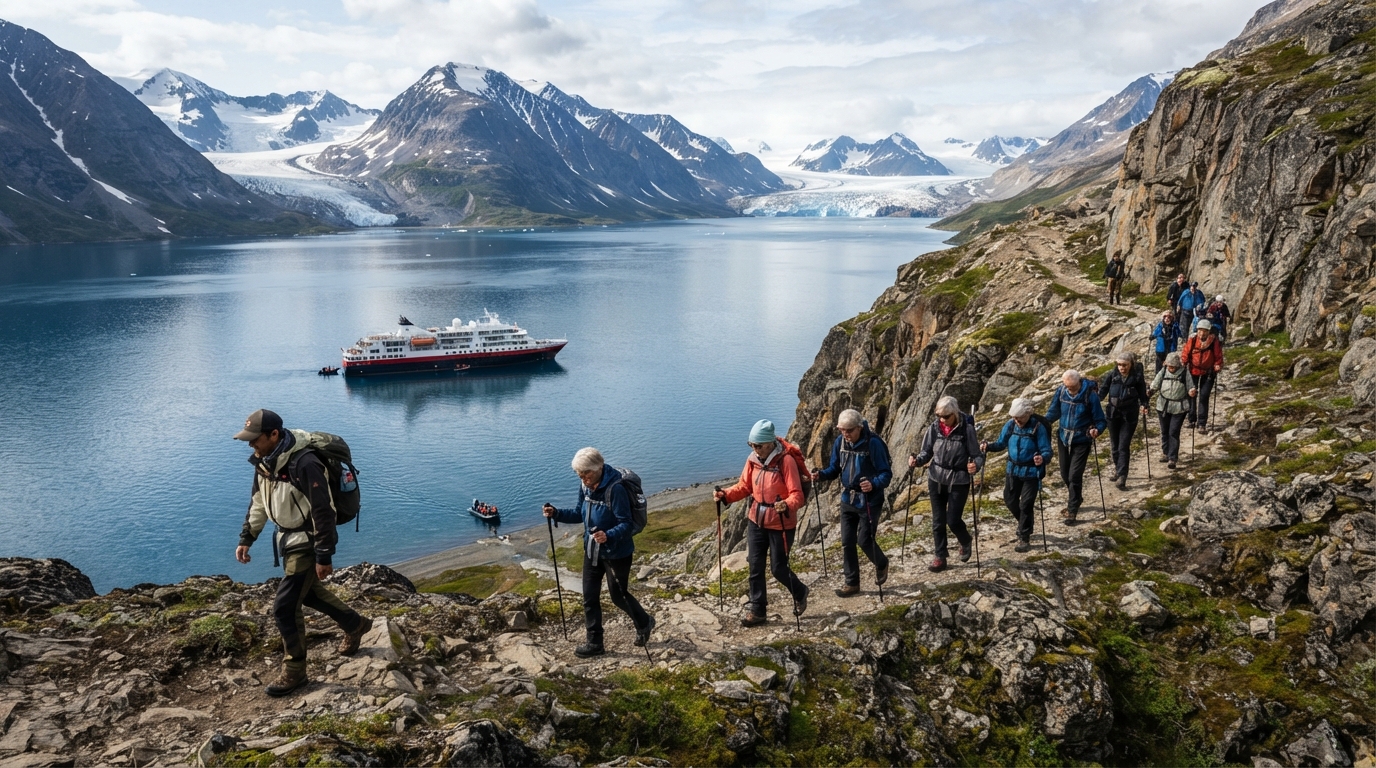
Adventure cruises with hiking excursions combine sea travel with on-land trekking experiences across destinations like Alaska, the Galápagos, and the Arctic. These voyages suit all fitness levels and offer expert-guided hikes through national parks, remote wilderness, and UNESCO-protected landscapes—all from the comfort of a ship.
Few travel experiences match the feeling of waking up anchored beside a glacier, lacing up your hiking boots, and stepping ashore into untouched wilderness—then returning to a warm meal and a comfortable cabin by evening. That’s exactly what adventure cruises deliver: the freedom of ocean travel combined with the raw, physical satisfaction of exploring landscapes on foot.
Over the past decade, demand for experiential travel has surged. Travelers are no longer content to simply observe destinations from a deck—they want to walk through them, breathe them in, and feel the terrain beneath their feet. Adventure cruises answer that call directly, pairing expedition-style sailing with curated shore excursions that range from gentle coastal walks to multi-day backcountry treks.
This type of travel also solves a practical problem. Organizing a remote hiking trip independently—especially in places like Alaska, Patagonia, or the Galápagos—requires significant logistical effort. Booking guides, arranging transport, securing permits, and managing accommodation across multiple remote locations is time-consuming and expensive. Adventure cruises bundle all of that into a single, cohesive itinerary.
This guide covers everything you need to know: the world’s best destinations, how to choose the right cruise for your fitness level, what to pack, and how to find an option that fits your budget. Whether you’re a first-time cruiser curious about adding active excursions to your next trip, or a seasoned hiker looking to access trailheads that are otherwise unreachable, this post will help you plan with confidence.
What Makes Adventure Cruises Different from Traditional Cruises?
Traditional cruises prioritize comfort, entertainment, and port stops in busy tourist hubs. Adventure cruises take the opposite approach. The ship is a means of access, not the destination itself. Itineraries are built around reaching places that commercial vessels don’t visit—remote fjords, uninhabited islands, protected wilderness areas, and coastlines where roads simply don’t exist.
Onboard, the atmosphere reflects this philosophy. Passenger counts are typically much lower—often between 50 and 200 guests compared to the thousands aboard mainstream cruise ships. Naturalists, geologists, and certified hiking guides frequently serve as onboard experts, delivering lectures in the evenings and leading shore excursions during the day.
Hiking is one of the most popular onshore activities offered across expedition cruise programs. Some itineraries feature one or two optional hikes per voyage. Others are built almost entirely around hiking, with daily excursions into national parks, volcanic landscapes, coastal cliffs, and mountain terrain. The depth of the hiking program varies significantly by operator and destination, which is why understanding your options before booking matters.
The World’s Best Destinations for Adventure Cruises with Hiking
Alaska: Glaciers, Forests, and Fjords on Foot
Alaska adventure cruises with hiking excursions consistently rank among the most sought-after expedition voyages in the world. The Inside Passage—a network of fjords and channels stretching from Washington State to Southeast Alaska—is the backbone of most Alaskan cruise itineraries, offering access to some of North America’s most dramatic wilderness.
Common hiking destinations along this route include Glacier Bay National Park, Tongass National Forest (the largest national forest in the United States), Kenai Fjords National Park, and Misty Fjords National Monument. Trails range from flat, accessible forest walks to steep ascents with panoramic views of tidewater glaciers.
The hiking season in Alaska runs roughly from May through September. July and August offer the longest daylight hours—sometimes up to 18 hours of usable light—which allows for extended onshore excursions. Wildlife sightings are common; brown bears, bald eagles, humpback whales, and sea otters frequently appear along the trail or just offshore.
Operators like Lindblad Expeditions, UnCruise Adventures, and American Cruise Lines run multi-day adventure cruises with hiking activities throughout the Alaskan season, with options tailored to both casual walkers and experienced trekkers.
Galápagos Islands: Volcanic Trails and Living Laboratories
The Galápagos archipelago sits roughly 1,000 kilometers off the coast of Ecuador and remains one of the most ecologically significant places on Earth. Galápagos adventure cruises with hiking tours offer something genuinely rare: the chance to walk alongside wildlife that has no fear of humans.
Visitor access to the Galápagos is strictly regulated by the Ecuadorian government. Independent travel is limited, and hikers must be accompanied by licensed naturalist guides at all times. This makes expedition cruises the most practical—and often the only viable—way to access multiple islands within a single trip.
Each island has a distinct geological and ecological character. Española Island is known for its cliffs and albatross colonies. Isabela Island offers a challenging hike to the rim of Sierra Negra, one of the most active volcanoes in the Galápagos. Bartolomé Island features a short but steep trail to a volcanic pinnacle with one of the archipelago’s most photographed views.
Hike difficulty in the Galápagos is generally moderate. Trails are well-marked and distances are manageable, but volcanic terrain—loose rock, uneven surfaces, and exposed ridges—means proper footwear and reasonable fitness are both important.
Arctic and Antarctica: Expedition Hiking at the Ends of the Earth
Arctic expedition cruises with hiking represent some of the most remote and physically demanding adventure travel available. Destinations include Svalbard (Norway), Greenland, Iceland’s Westfjords, and—for the most committed adventurers—the Antarctic Peninsula.
Hiking in the Arctic and sub-Antarctic regions is rarely done on marked trails. Instead, guides lead small groups across open tundra, glacial moraines, and coastal plateaus, reading the terrain as they go. This is genuine expedition hiking: dynamic, unpredictable, and deeply immersive.
The wildlife in these regions is extraordinary. Polar bears, walruses, arctic foxes, and thousands of nesting seabirds inhabit the same terrain you’re crossing on foot. Guides are trained in wildlife safety protocols and carry communications equipment in case conditions change rapidly.
The window for Arctic cruising is narrow—typically June through August—when sea ice retreats enough to allow safe navigation. Antarctic expeditions run from November through March, which is the austral summer. Booking well in advance is essential; popular departures in both regions sell out more than a year ahead.
Patagonia and Chile: Mountains, Ice Fields, and Coastal Wilderness
Few landscapes on Earth are as visually striking as Patagonia. The region spans the southern tip of South America, spanning parts of Argentina and Chile, and encompasses some of the most dramatic mountain and glacier scenery anywhere on the planet.
Adventure cruises featuring mountain hiking in Patagonia typically navigate the Chilean fjords, Beagle Channel, and Cape Horn—some of the most remote waterways on Earth. Shore excursions may include hikes within Torres del Paine National Park, treks across the Southern Patagonian Ice Field approaches, or walks through lenga beech forests with views of granite towers rising thousands of meters above sea level.
The weather in Patagonia is notoriously unpredictable. Wind speeds can change dramatically within hours, and rain is possible at any time of year. Layering systems, waterproof gear, and flexibility are essential. Expedition cruise operators in this region build weather contingency into their itineraries, which is another reason cruise-based travel suits Patagonia particularly well.
Norway and the Scottish Highlands: Accessible Adventure Close to Home
Not all adventure hiking cruises require crossing an ocean. Norway’s fjord coast and Scotland’s Outer Hebrides offer spectacular hiking on a more accessible scale. These destinations are popular with European travelers and with North Americans seeking a cultural hiking experience alongside their expedition sailing.
In Norway, itineraries often include hikes to viewpoints above the Geirangerfjord (a UNESCO World Heritage Site), ascents in the Lofoten Islands, and coastal walks in Hardangerfjord. Scotland offers coastal treks across the Isle of Skye, walks through ancient Caledonian forest, and hikes along cliff-top paths in the Outer Hebrides.
These destinations also serve as excellent entry points for adventure cruises with guided nature hikes—well-structured, expert-led excursions designed for travelers who want a meaningful outdoor experience without extreme terrain or remote logistics.
Who Are Adventure Cruises with Hiking Excursions Best Suited For?
Are Adventure Cruises Suitable for Beginners?
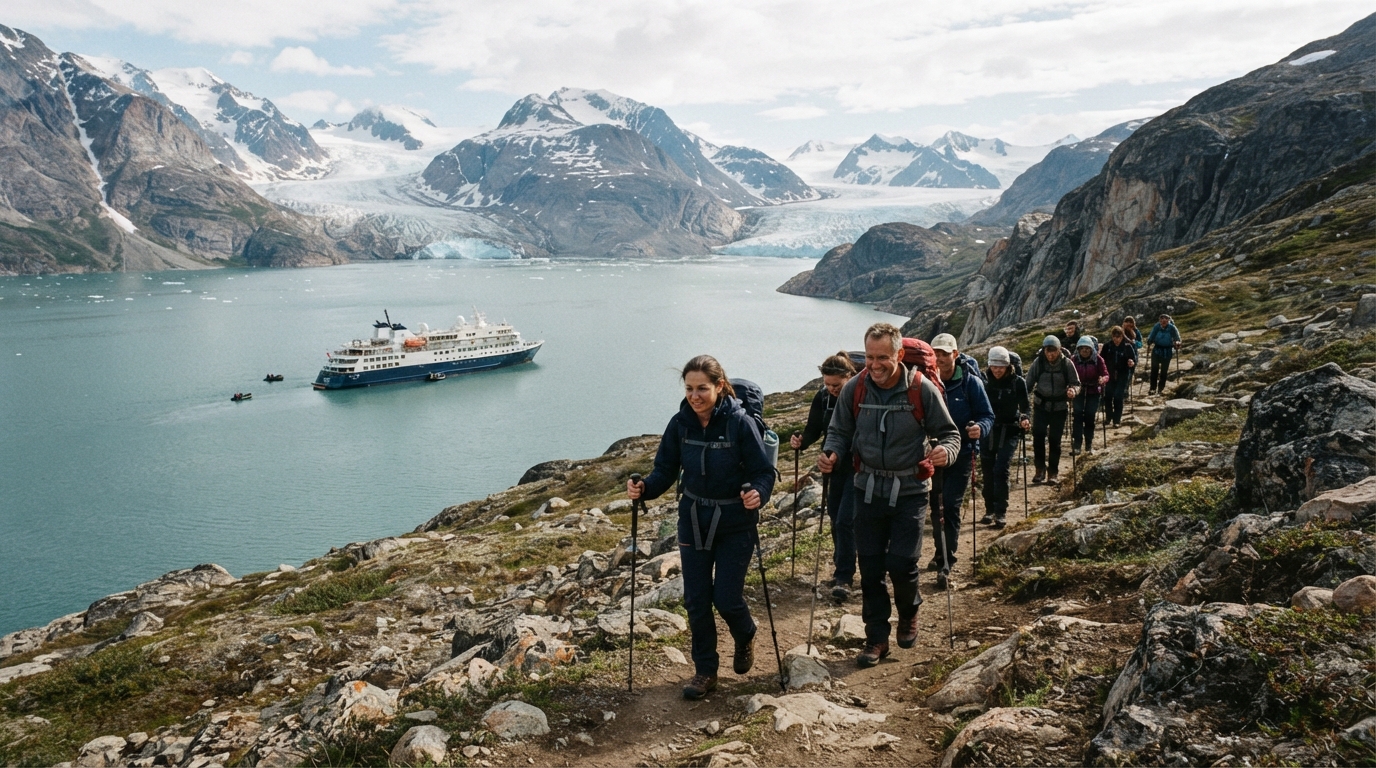
Yes—with the right itinerary. Many operators specifically design best adventure cruises with hiking excursions for beginners, offering tiered activity levels on each shore excursion so that guests can choose their intensity. A typical departure might offer a 2-kilometer flat coastal walk, a moderate 6-kilometer forest trail, and a strenuous 12-kilometer ridge hike—all departing at the same time from the same landing site.
This tiered approach means that couples or groups with mixed fitness levels can travel together comfortably. One person completes the challenging hike while another opts for the leisurely walk, and both return to the ship having had a fulfilling experience.
Beginners should look for itineraries that explicitly describe hiking difficulty levels in their excursion notes, offer flexible participation (no hike is mandatory), carry medical staff onboard, and include guidance on physical preparation before departure.
What Fitness Level Do You Need for Expedition Hiking Cruises?
Fitness requirements vary enormously depending on the destination and operator. A Galápagos cruise with moderate island hikes requires a reasonable baseline of walking fitness but nothing more. An Arctic expedition involving off-trail trekking across glacial terrain demands a significantly higher level of cardiovascular fitness, balance, and cold-weather endurance.
As a general rule, operators rate their excursions on a scale of 1 to 4 or similar, with Level 1 being suitable for most healthy adults and Level 4 reserved for guests with active outdoor experience. Most adventure cruise itineraries fall into the Level 2–3 range, which corresponds roughly to regular hiking on established trails with moderate elevation gain.
If you’re preparing for your first adventure cruise, building a base of regular walking (30–60 minutes daily), incorporating hill or stair climbing, and practicing with a loaded day pack in the months before departure will set you up well.
How to Choose the Right Adventure Cruise with Hiking
What Should You Look for in a Hiking-Focused Cruise Itinerary?
Not every cruise advertised as an “adventure” offers substantive hiking. Some include only one or two brief walks across an entire voyage. When evaluating itineraries, focus on these specific factors:
|
Factor |
What to Check |
|---|---|
|
Number of hiking days |
How many days include onshore hiking excursions? |
|
Trail difficulty levels |
Are excursions graded by difficulty? |
|
Guide credentials |
Do guides hold hiking or naturalist certifications? |
|
Group size |
How many passengers per guide during hikes? |
|
Landing method |
Are hikes accessed by Zodiac, tender, or direct dock? |
|
Flexibility |
Can you opt out of hikes without affecting others? |
|
Equipment provided |
Does the operator supply poles, boots, or gaiters? |
The guide-to-guest ratio during shore excursions is particularly important. On well-run expedition cruises, hiking groups typically consist of no more than 10–12 guests per guide. Larger groups compromise both safety and the quality of the experience.
Which Adventure Cruise Operators Specialize in Hiking Excursions?
Several operators have built strong reputations specifically around active expedition travel:
Lindblad Expeditions (in partnership with National Geographic) operates globally and is known for high-caliber naturalist staff and rigorous expedition standards across Alaska, the Arctic, Galápagos, and Antarctica.
UnCruise Adventures focuses exclusively on small-ship expedition travel in Alaska, the Pacific Northwest, Hawaii, and Central America. Their itineraries are built around active excursions including hiking, kayaking, and snorkeling.
Hurtigruten Expeditions offers Norway, Greenland, Antarctic, and global expedition cruises with strong naturalist programs and multi-day adventure cruises with hiking activities.
Quark Expeditions specializes in polar travel, running Arctic expedition cruises with hiking as a core activity across Svalbard and Greenland itineraries.
Silversea Expeditions offers a more premium experience at a higher price point, with destinations spanning all seven continents and onboard expedition teams that include geologists, ornithologists, and certified mountain guides.
Affordable Adventure Cruises with Hiking Excursions: What to Expect at Different Price Points
Cost is one of the most common concerns for travelers researching adventure cruises. Small-ship expedition travel is generally more expensive than mainstream cruising, but the price range is wider than many people assume.
At the budget end, affordable adventure cruises with hiking excursions are available in the $2,000–$4,000 per person range for shorter voyages of 5–8 days. These tend to operate in more accessible destinations (coastal Alaska, Iceland, or Norway) aboard smaller vessels with fewer onboard amenities.
Mid-range expeditions—typically $4,000–$10,000 per person for 8–14 days—represent the largest segment of the market. This tier covers most Galápagos, Alaska, and Patagonia itineraries from reputable operators.
Premium polar expeditions—Arctic, Antarctic, and remote expedition voyages—typically run $10,000–$25,000+ per person. These prices reflect the genuine logistical complexity of operating safely in extreme environments, including ice-strengthened vessels, onboard medical facilities, and highly specialized expedition staff.
Booking during shoulder seasons (spring and early fall in most destinations) and securing early-bird pricing—often available 12–18 months ahead of departure—can significantly reduce costs without compromising experience quality.
What to Pack for an Adventure Cruise with Hiking Excursions
Essential Gear for Expedition Hiking from a Ship
Packing for an adventure cruise requires balancing shipboard luggage limits with the practical demands of outdoor hiking. Most expedition operators publish detailed packing lists, but these core items apply across most destinations:
Footwear:
- Waterproof, ankle-supporting hiking boots (broken in before departure)
- Lightweight camp shoes or sandals for onboard use
- Gaiters for volcanic or muddy terrain
Clothing layers:
- Moisture-wicking base layers
- Insulating mid-layer (fleece or down jacket)
- Hardshell waterproof outer layer (jacket and pants)
- Warm hat, gloves, and neck gaiter (essential for polar destinations)
Day hiking essentials:
- Daypack (20–30 liters)
- Trekking poles (collapsible for easy packing)
- Sunscreen, sunglasses, and a wide-brim hat
- Water bottle or hydration reservoir
- First aid kit with blister treatment
Many operators in cold-weather destinations provide rubber boots (Wellingtons) for wet landings via Zodiac, which saves packing space. Confirm with your specific operator what equipment is supplied versus what you need to bring.
Adventure Cruises with National Park Access: What Makes Them Special
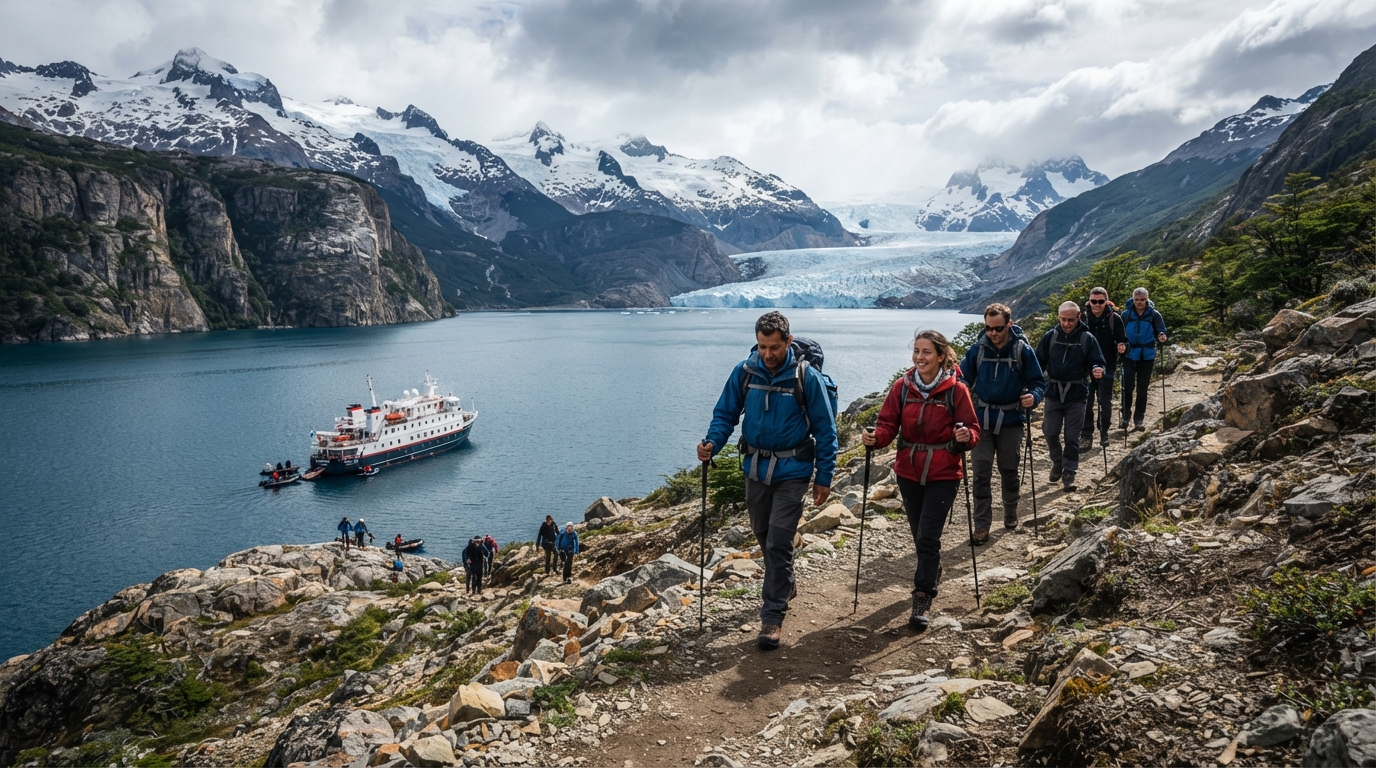
Several of the world’s most celebrated hiking destinations sit within or adjacent to national parks that are difficult or impossible to reach independently. Adventure cruises with national park hikes offer permitted access to these protected areas as part of the cruise itinerary—a significant logistical advantage.
In the United States, this includes Glacier Bay National Park in Alaska, accessible only by air or sea. In Ecuador, Galápagos National Park restricts independent entry and requires licensed guides. In Chile, certain sections of Torres del Paine are accessible from the sea in ways that land-based routes don’t allow.
The environmental stewardship built into well-run expedition cruises is also worth noting. Reputable operators follow Leave No Trace principles, brief guests thoroughly on wildlife interaction protocols, and actively contribute to conservation programs in the regions they visit. Travelers who care about the ecological impact of their adventures tend to find this aspect of expedition cruising particularly compelling.
Planning Your First Adventure Cruise with Hiking: A Step-by-Step Approach
Getting the planning right makes the difference between a trip that exceeds expectations and one that leaves you wishing you’d done things differently. Here’s a practical framework:
Step 1 — Define your hiking ambitions. Are you looking for gentle nature walks, moderate day hikes, or demanding backcountry trekking? Your answer narrows the destination list significantly.
Step 2 — Set a realistic budget. Include the cruise fare, flights (often to remote gateway cities or international hubs), travel insurance, gear, and tipping. Total trip costs often run 20–30% above the base cruise fare.
Step 3 — Research operators, not just itineraries. Read third-party reviews on platforms like TripAdvisor and Cruise Critic, and check whether operators are members of organizations like IAATO (International Association of Antarctica Tour Operators) or Expedition Cruise Network.
Step 4 — Check physical requirements. Most operators provide fitness guidelines. Be honest with yourself. A mismatch between your fitness level and the demands of the itinerary will diminish your experience and potentially create safety concerns.
Step 5 — Book early. Popular adventure cruises for hiking enthusiasts—especially polar departures—fill up quickly. Booking 12–18 months ahead gives you the best selection of cabins and often access to early-bird pricing.
Step 6 — Prepare physically. Start a progressive hiking program at least 3 months before departure. Include hills, loaded pack carries, and multi-hour walks to build the endurance you’ll need onshore.
The Future of Hiking-Based Expedition Cruising
Expedition cruising is among the fastest-growing segments of the broader travel industry. According to the Cruise Lines International Association (CLIA), the expedition and adventure cruise segment has grown consistently over recent years, driven by travelers seeking purposeful, immersive experiences rather than passive recreation.
New expedition vessels are being commissioned by multiple operators, incorporating hybrid-electric propulsion systems, enhanced passenger comfort, and improved environmental performance. The trend toward smaller, more nimble ships continues, enabling access to anchorages and landing sites that larger vessels cannot reach.
Technology is also improving the hiking experience itself. Digital trail mapping, wildlife identification apps, and real-time weather monitoring tools are increasingly integrated into onshore excursion planning. Some operators now provide guests with GPS devices for solo or small-group hiking in approved zones.
As demand grows, so does the responsibility to protect the environments that make these experiences possible. The leading expedition cruise operators are increasingly transparent about their carbon offset programs, wildlife protection policies, and community engagement in the destinations they visit.
Making the Most of Your Adventure Cruise Experience
Adventure cruises with hiking excursions reward travelers who show up prepared—physically, logistically, and mentally. The most memorable moments on these voyages tend to happen away from the ship: on a ridgeline above a fjord, standing in silence beside a glacier, or watching a colony of penguins waddle past at arm’s length.
The ship gets you there. The hiking is why you came.
If this style of travel resonates with you, start by identifying one destination that genuinely excites you. Research two or three operators who run that itinerary. Read recent guest reviews, contact the operators directly with questions, and request their excursion activity level guides. Then commit. The planning process for expedition cruises is long, but the anticipation is part of the experience.
The trailhead is closer than you think.
Frequently Asked Questions
1. What are the best adventure cruises with hiking excursions for beginners?
Alaska’s Inside Passage and Norway’s fjord coast offer the most beginner-friendly options. Both destinations feature well-maintained trails, mild terrain, and tiered activity levels so guests can choose their effort. Operators like UnCruise Adventures and Hurtigruten Expeditions structure excursions to accommodate mixed-fitness groups, making them ideal for first-time expedition travelers.
2. How physically fit do I need to be for an adventure cruise with hiking?
Most standard adventure cruise hiking excursions require a moderate baseline of fitness—roughly equivalent to being comfortable walking 8–10 kilometers on uneven terrain. Polar and remote expedition itineraries demand more. Consult your operator’s activity level guide and begin a targeted hiking preparation program at least three months before departure.
3. What are the best Galápagos adventure cruises with hiking tours?
Lindblad Expeditions (National Geographic) and Ecoventura are two of the most highly regarded operators for Galápagos expedition cruises. Both offer naturalist-guided hikes across multiple islands, including Española, Isabela, and Bartolomé, with access to landing sites that require licensed guides.
4. When is the best time for Alaska adventure cruises with hiking excursions?
May through September is the primary Alaska cruise season. July and August offer the warmest temperatures, longest daylight hours, and most reliable trail conditions. May and June are excellent for fewer crowds and active wildlife, particularly bears and nesting birds.
5. How do Arctic expedition cruises with hiking differ from Antarctic cruises?
Arctic cruises (Svalbard, Greenland) typically run June–August and often involve tundra hiking, coastal walks, and glacier approaches. Antarctic expeditions run November–March and focus more on penguin colonies, glacial scenery, and dramatic coastal landscapes. Both require serious layering systems and waterproof gear. Arctic itineraries generally allow slightly more flexibility for off-trail hiking.
6. Are there affordable adventure cruises with hiking excursions under $5,000?
Yes. Shorter itineraries in Alaska (5–7 days), coastal Norway, and Iceland regularly fall within the $2,500–$4,500 per person range during shoulder season. Booking early-bird rates and traveling in May or September rather than peak summer months can reduce costs considerably.
7. What should I pack for adventure cruises with guided nature hikes?
Waterproof hiking boots, layered technical clothing (moisture-wicking base, insulating mid-layer, hardshell outer), a 20–30 liter daypack, trekking poles, sunscreen, and a wide-brim hat are core essentials. Operators often provide rubber boots for wet landings. Request your operator’s specific packing list at least two months before departure.
8. Do adventure cruises for hiking enthusiasts visit national parks?
Yes. Many itineraries include permitted access to protected areas such as Glacier Bay National Park (Alaska), Galápagos National Park (Ecuador), and sections of Torres del Paine (Chile). Expedition operators hold the permits and provide licensed guides, which is one of the key logistical advantages of booking through a reputable cruise operator.
9. How large are hiking groups on expedition cruises?
On well-run expedition cruises, hiking groups typically consist of 8–12 guests per guide. This ratio supports both safety and quality—smaller groups move more efficiently on challenging terrain and allow for richer interaction with the guide and the environment. Confirm guide-to-guest ratios with your operator before booking.
10. Can multi-day adventure cruises with hiking activities accommodate families with children?
Yes, with careful itinerary selection. Some operators run family-specific departures, particularly in Alaska and the Galápagos. Age minimums vary—many polar expeditions require guests to be at least 12 or 15 years old. Family-friendly itineraries typically feature shorter hikes, engaging wildlife encounters, and flexible shore time to accommodate younger travelers.