Embarking on a polar expedition is an exhilarating challenge that demands meticulous planning and specialized equipment. Whether you’re chasing the Northern Lights in the Arctic or venturing to remote research outposts in Antarctica, your success hinges on a well-thought-out polar expedition packing list. In today’s digital landscape, travelers can access endless gear guides, but real-world experience and reliable recommendations from authorities like the Norwegian Polar Institute (https://www.npolar.no/en/) and NOAA (https://www.noaa.gov) remain indispensable.
This year (2026), explorers must balance lightweight gear choices with robust protection against subzero temperatures, biting winds, and unpredictable weather. From the moment you step off the icebreaker to setting up camp on glacial fields, every item on your packing list serves to protect your health, enhance comfort, and facilitate smooth logistics. Throughout this comprehensive guide, we’ll break down each category—clothing, shelter, cooking systems, navigation tools, safety equipment, and more—helping you craft a polar expedition packing list that aligns with your itinerary and activity level.
With a focus on current best practices and authoritative insights, this article offers structured sections covering environmental considerations, layering systems, specialized gear, and essential electronics. By the end, you’ll be equipped with actionable advice to finalize your packing strategy and head into the ice armed with confidence. Let’s dive into the critical elements that will ensure your polar adventure remains memorable for all the right reasons.
Understanding Polar Challenges and Environmental Planning
Polar regions are defined by extreme cold, vast stretches of ice, and ever-changing weather dynamics. In the Arctic, expeditions often involve ship-based voyages, zodiac landings, and interactions with indigenous communities, while Antarctica demands extended stints at remote research camps, crevasse navigation, and high winds known as katabatic flows. Recognizing these distinctions is the first step in tailoring your polar expedition packing list.
Temperature fluctuations in polar zones can range from -10°C to below -40°C, with wind chill factors that dramatically worsen perceived cold. This year (2026), researchers at leading institutions emphasize the need to monitor real-time satellite forecasts and sea-ice drift patterns. A reliable weather app coupled with daily briefings from your operator will guide on-the-ground decisions and clothing adjustments.
Key considerations for your planning phase include understanding daylight cycles—24-hour darkness in winter months and continuous daylight in summer—and the impact on navigation and human physiology. Equipment that functions under low-light conditions, such as illuminated GPS waypoints and infrared-compatible goggles, becomes vital. Also factor in emergency evacuation protocols; carrying a Personal Locator Beacon (PLB) or satellite communicator ensures you can summon rescue teams if you stray from your group or encounter sudden crevasse incidents.
Logistical elements, such as cargo limits on research flights or expedition vessels, require careful item weighing. Distribute gear evenly across duffels and trunks to avoid overweight fees and ensure access to critical items during transit. Finally, consider environmental regulations under the Antarctic Treaty System and Arctic Council guidelines—responsible packing and waste management minimize your ecological footprint and help preserve fragile polar ecosystems.
Building Your Clothing and Layering System
![[object Object]](https://nauticalfuns.com/wp-content/uploads/2026/04/polar-packing-guide-essential-gear-for-arctic-amp-image-1.webp)
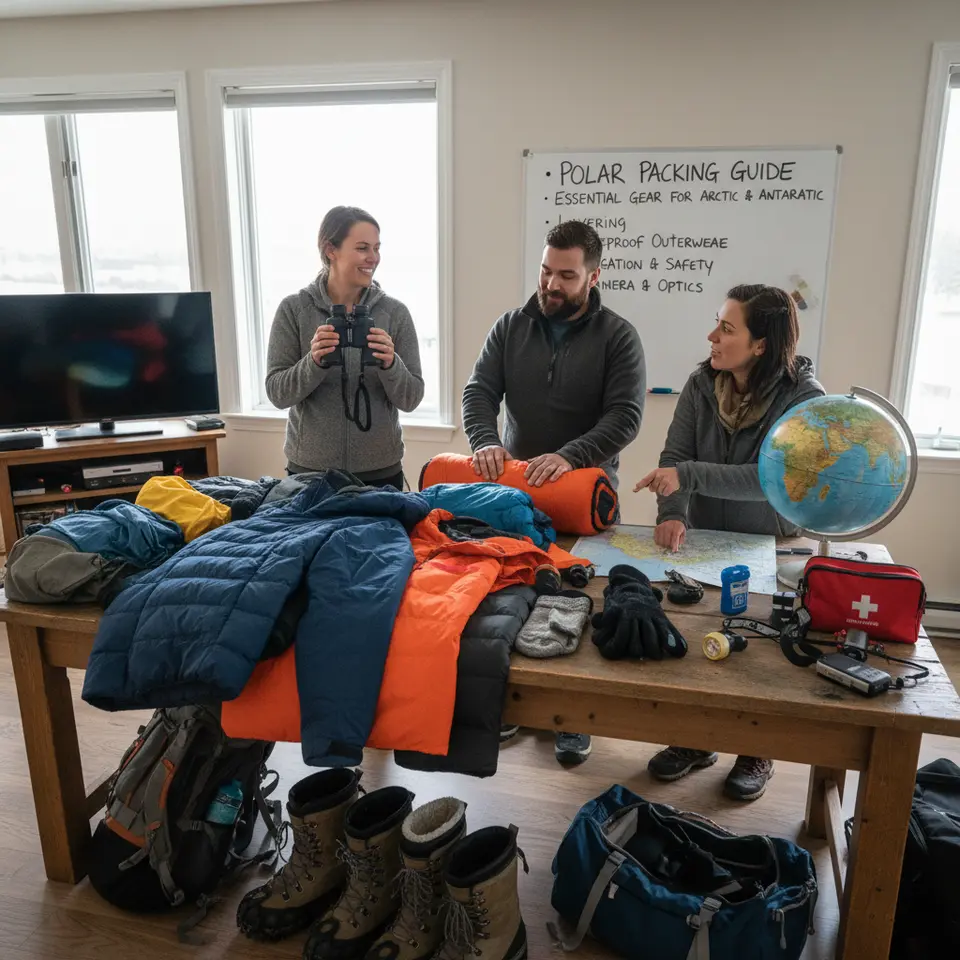
At the heart of any polar expedition packing list lies a versatile, moisture-managing layering system. Cotton garments are strictly prohibited; instead, choose moisture-wicking base layers made from merino wool or high-performance synthetic fibers. These materials rapidly transport sweat away from the skin, reducing hypothermia risks when temperatures plummet.
Your mid-layer should consist of insulating pieces, such as fleece jackets or lightweight down pullovers. This layer traps warm air close to your torso and adapts easily when you transition from seated activities to active pursuits like glacier trekking. Bring multiple mid-layers to swap damp items for dry ones, especially on multi-day excursions where laundry isn’t available.
The outer shell completes your core ensemble. Opt for a three-layer waterproof, windproof jacket and pants rated for subzero performance. Membranes like Gore-Tex or ePTFE provide breathability, allowing internal moisture to escape without compromising on protection. Look for features such as helmet-compatible hoods, adjustable cuffs with neoprene lining, reinforced shoulders, and full-length side zips on pants for donning over thick boots.
Accessories play a pivotal role in temperature regulation. Pack a fleece neck gaiter, insulated beanies, and a balaclava to combat heat loss through exposed areas. For prolonged outdoor activities in severe conditions, consider a face mask or expedition-grade balaclava with ventilation ports to prevent goggles from fogging. When creating your final polar expedition packing list, don’t overlook the importance of spare liners and accessory pieces; damp gear can become a hazard in remote settings.
Footwear, Shelter, and Sleeping Systems
Proper footwear and shelter systems form the backbone of comfort and safety in polar landscapes. Polar-rated boots with 600–800 grams of insulation—typically Thinsulate or equivalent—are essential. Seek models with integrated over-boots or crampon compatibility to ensure stability on ice ridges. Your boots should feature rigid soles and ankle support to minimize fatigue on extended treks.
Sock layering is equally crucial. Use thin synthetic liners to wick moisture, followed by thick wool or synthetic socks. Rotate pairs daily to allow damp socks to dry, and carry enough spares to maintain foot health. Blisters can rapidly escalate into major issues when you’re far from medical facilities.
When camping on sea ice or glaciers, a four-season tent is non-negotiable. Double-wall tents with robust pole structures withstand high winds and drifting snow. Ample vestibule space allows you to store sleds, boots, and cooking systems outside the living chamber. Practice pitching your shelter at home to identify potential challenges like frozen zipper tracks or pole assembly hiccups.
Your sleeping system should include a subzero-rated down bag, ideally rated to -40°C. Mummy shapes with insulated hoods and draft collars lock in heat. Pair this with a closed-cell foam pad or inflatable pad boasting a high R-value to minimize conductive heat loss through the ice. A lightweight sleeping bag liner—silk or fleece—adds extra warmth and helps maintain bag hygiene on longer journeys.
Cooking, Hydration, and Essential Gear
![[object Object]](https://nauticalfuns.com/wp-content/uploads/2026/04/polar-packing-guide-essential-gear-for-arctic-amp-image-2.webp)
Cooking at extreme latitudes requires specialized stoves and cookware. Liquid-fuel stoves using white gas or multi-fuel cartridges maintain consistent output in severe cold, outperforming canister stoves that suffer pressure drops. Carry windshields, spare fuel bottles, and repair kits with o-rings and fuel pump parts. To streamline melting snow for drinking water, use pots with integrated heat exchangers; they reduce boil times and conserve precious fuel.
Insulated bottles or thermoses are vital for maintaining warmth and preventing liquids from freezing. Plan to melt and store water in bulk at each campsite, then distribute into smaller flasks for day trips. Hydration directly affects performance and reduces frostbite risk in hands and lips.
Organize cooking utensils—lightweight titanium or aluminum pots with pour spouts—and sturdy mugs. Include high-calorie dehydrated meals, freeze-dried entrees, and snacks rich in fats and proteins. Energy bars, nut mixes, and chocolate provide quick boosts during photography sessions or long surface crossings.
Finally, assemble a detailed polar expedition packing list for small essentials: duct tape strips for quick repairs, paracord for hauling and rigging, a compact multi-tool, and waterproof matches or lighters. Even the smallest convenience items can become lifesavers in isolated polar camps.
Navigation, Communication, and Safety Equipment
Whiteout conditions and featureless terrain demand reliable navigation tools. GPS units with preloaded waypoints should be backed up by paper maps and a dependable compass. Store electronics in waterproof cases or dry bags to shield against moisture and condensation. Keep spare batteries warm in your jacket until needed, as cold depletes power rapidly.
Communication devices are indispensable. Satellite phones or personal locator beacons (PLBs) provide emergency channels for evacuations or medical assistance. Two-way radios may be mandated by some operators for team coordination during landings or traverse legs. Familiarize yourself with marine VHF protocols or specified expedition frequencies.
Safety equipment for glacier travel includes crampons, an ice axe, and a crevasse rescue kit with pulleys and prusiks. Practice self-arrest techniques and rope team movements before departure. An avalanche probe and shovel are essential if you plan to cross snowfields with variable depths.
Your first-aid kit should cater to cold-specific injuries—include blister dressings, frostbite prevention packs, sterile gloves, and emergency bivouac sacks. Hand and foot warmers provide rapid heat in emergencies, while a reflective survival blanket can stave off hypothermia during extended rescues. Document your medical history and allergies in a waterproof pouch for quick access by guides or medics.
FAQ
What materials should I avoid when packing for polar expeditions?
Avoid cotton garments in all layers, as they retain moisture and increase hypothermia risk.
How can I prevent electronics from losing power in subzero temperatures?
Keep spare batteries in an interior jacket pocket to maintain warmth and switch them out as needed.
What is the best way to manage meltwater for hydration?
Use insulated bottles or thermoses to store melted snow in bulk and distribute into smaller flasks for day trips.
Conclusion
Planning a successful polar expedition packing list requires blending authoritative advice, hands-on testing, and consideration of unique environmental variables. By understanding polar challenges, perfecting your layering system, selecting robust shelters and sleeping systems, and equipping yourself with specialized cooking, navigation, and safety gear, you’ll be prepared for whatever the Arctic or Antarctic throws your way.
Today’s explorers must balance weight limits and functionality, ensuring each item earns its place in your duffel bag. Regular gear rehearsals, consultations with tour operators, and adherence to environmental guidelines further guarantee a smooth expedition. Approach your journey with respect for the fragile ecosystems you’ll traverse, and let thorough preparation transform your polar adventure into an unforgettable milestone in your travel legacy.